Starting a book club is one of the most rewarding ways to read more — you get accountability, conversation, and a built-in reason to finish the book. But the first one can feel daunting: who do you invite, what do you read, and how do you keep everyone actually turning pages? This guide walks you through setting up your first book club from scratch.
1. Decide on your club's vibe
Before you invite anyone, get clear on what kind of club you want. There's no single right answer — just be intentional so members know what they're signing up for.
- Cozy and social — the book is an excuse to get friends together. Discussion is light; snacks matter more than themes.
- Deep and analytical — members read closely and come ready to dig into ideas, structure, and craft.
- Genre-focused — sci-fi, romance, literary fiction, non-fiction. A clear lane makes picking books far easier.
- Silent — no shared book at all; everyone reads their own, together. See our guide to silent book clubs, 2026's fastest-growing format.
2. Pick your people (start small)
The sweet spot for a first book club is 4 to 8 members. Small enough that everyone gets to talk, big enough that a few absences don't cancel the meeting. Don't worry about filling every seat on day one — clubs grow best by word of mouth once they have a rhythm.
Mix friends who already read with a couple who want to read more. The aspirational readers often become your most engaged members once the accountability kicks in.
3. Choose your first book wisely
Your first pick sets the tone and decides whether people come back. Aim for something approachable, discussable, and not too long.
- Keep it under ~350 pages — finishing builds momentum; a 600-page tome kills it.
- Pick something divisive — books people have opinions about make for better conversation than universally-loved ones.
- Avoid required-reading vibes — this should feel like a treat, not homework.
Let the group vote on the first one or two picks so everyone feels ownership from the start.
4. Set a schedule and a reading pace
The number one reason book clubs fizzle is an unrealistic pace. A comfortable default is one book every four weeks. That gives busy readers room to finish without the deadline slipping out of sight.
Break the book into checkpoints
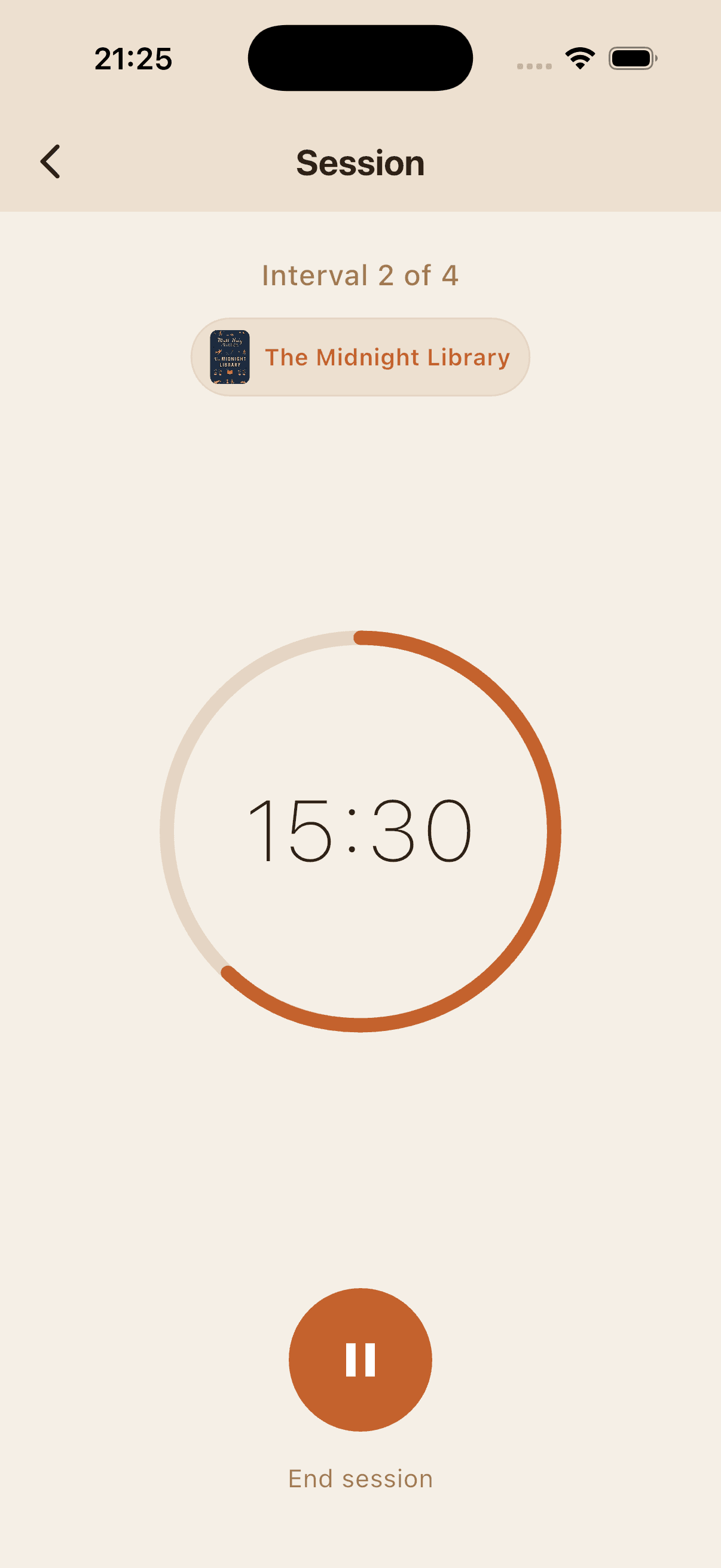
Instead of "read the whole thing by the 30th," split it into weekly targets — roughly 80–90 pages a week. Checkpoints turn a vague goal into a series of small, achievable reading sessions, and they give members something to talk about along the way.
5. Decide how you'll discuss
Meeting in person is lovely, but a club lives or dies between meetings. Pick a home base for ongoing chatter — a group chat, a shared channel, or an in-app club feed — so reactions and questions can flow as people read.
A few prompts that reliably spark good discussion:
- Which character did you trust the least, and why?
- What would you have done differently in the protagonist's place?
- Was the ending earned? Would you change it?
- What passage made you stop and re-read it?
6. Keep everyone actually reading
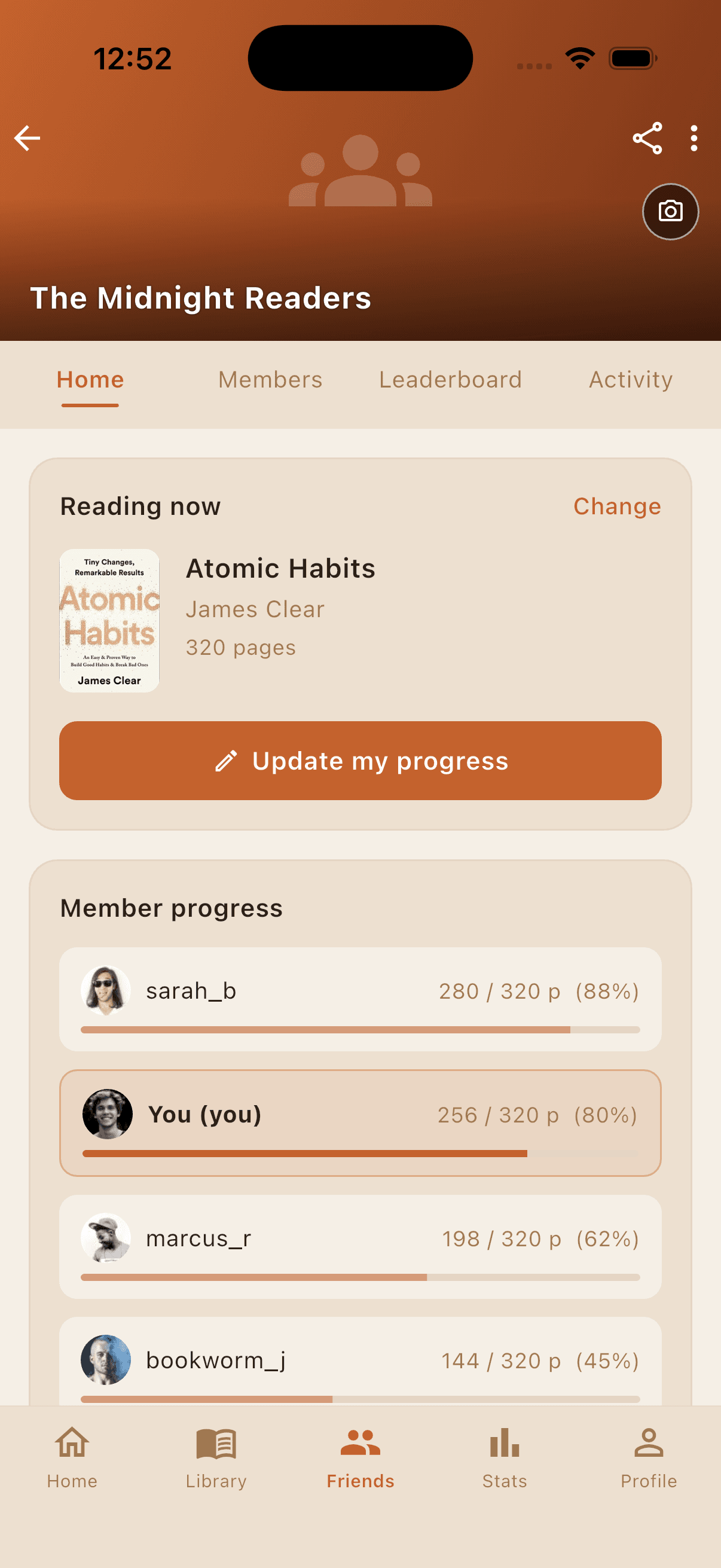
Accountability is the real engine of a book club. The clubs that last make reading visible — members can see each other's progress, cheer streaks, and feel a gentle nudge when they fall behind. That social pressure, in the friendliest sense, is what turns "I'll get to it" into pages read.
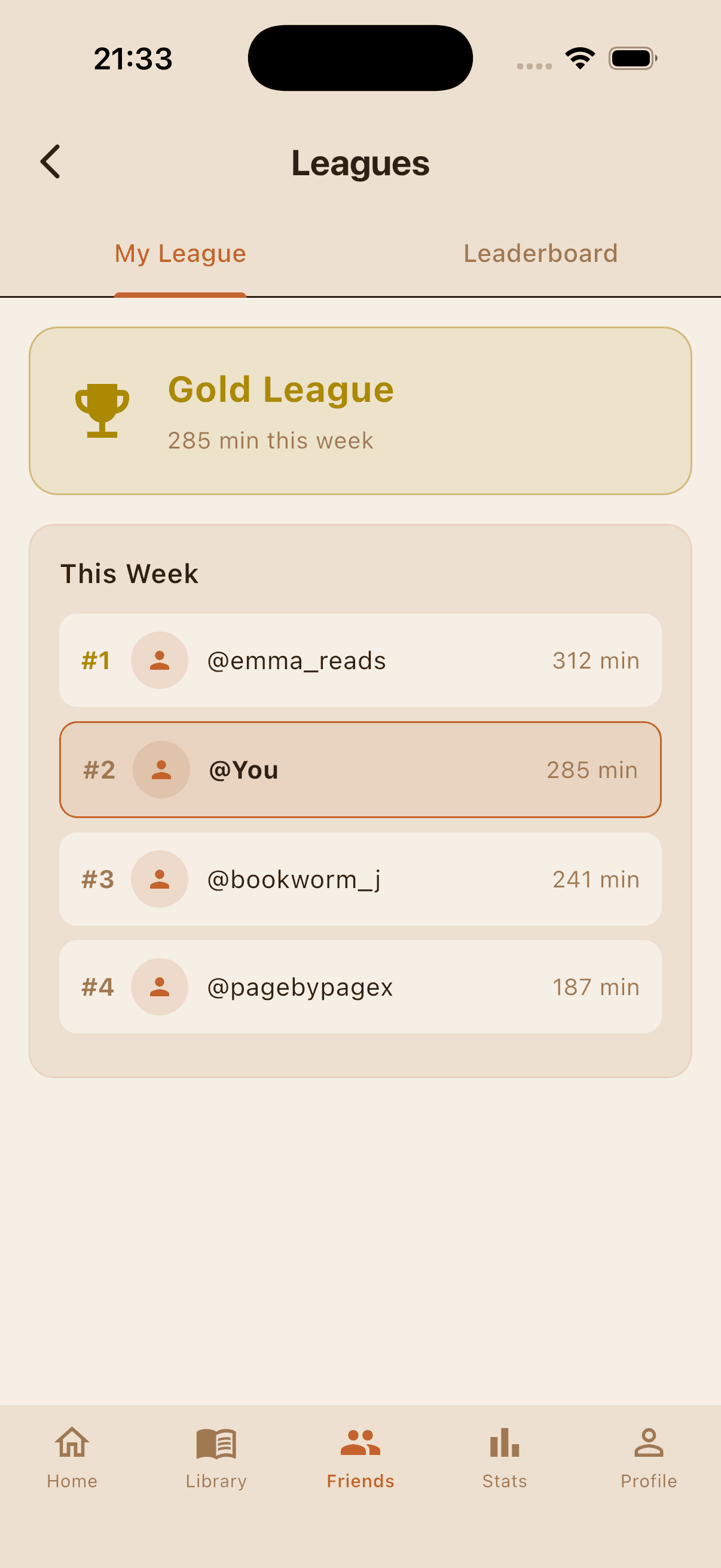
This is exactly why we built book clubs into Bookadoro. You can create a club, invite your members, set the book and pace, and everyone's reading sessions and progress show up in a shared feed — with streaks and reading leagues to keep the momentum going between meetings.
Your first-meeting checklist
- Club vibe agreed on and shared with members
- 4–8 people invited
- First book chosen (and voted on)
- Meeting date set ~4 weeks out
- Weekly reading checkpoints mapped
- A home for between-meeting discussion
That's it — you have everything you need to run a great first book club. The hardest part is simply starting, so pick a date, send the invites, and let the first book do the rest.
Start your reading club with Bookadoro
Create a club, set your book and pace, and keep everyone reading with shared progress, streaks, and reading leagues.
Download Free